
• Fitzgerald Hyundai of Rockville

Blog / 2026 Hyundai Kona

Hyundai Kona vs. Tucson: Which SUV Fits Your Lifestyle?

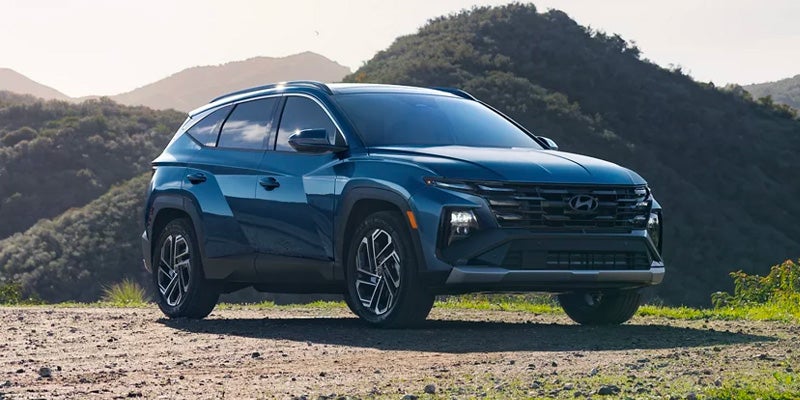
Blue Hyundai Tucson SUV parked on a scenic mountain overlook with hills in the background.

For Rockville, Maryland drivers considering a new Hyundai SUV, you may find yourself trying to decide between the Hyundai Kona vs. Tucson. These two models are among the most popular in Hyundai's lineup, and for good reason. Both deliver style, practicality, and strong value—but they're designed with different drivers in mind. Here's a closer look at how they compare so you can find the right fit.

Size and Space: Knowing What You Need

The most important difference between the Hyundai Kona and Tucson comes down to size. The subcompact Kona is an excellent choice for solo drivers, couples, or anyone who prioritizes easy parking and a nimble feel in traffic—as well as fantastic fuel economy for frequent driving at up to 35 MPG on the highway.

The Tucson, while still a compact SUV, offers noticeably more passenger and cargo room. The Kona’s 38.2” of rear legroom is a bit smaller than the Tucson’s 41.3”. The Tucson offers a generous 41.2 cu. ft. of cargo capacity, even with all the seats occupied—that expands to over 80 cu. ft. with the rear seats folded down. The Kona, on the other hand, provides 25.5 cu. ft. for everyday use, while folding the rear seats down opens that up to 63.7 cu. ft.

If you're regularly hauling gear, traveling with kids, or carpooling, the Tucson's larger footprint may serve you better day to day. For those who want something lighter and easier to maneuver, and aren’t afraid to pack in their stuff, the Kona hits the mark.

Powertrain Options: Gas, Hybrid, and Electric

Here, this Hyundai SUV comparison gets interesting. The Tucson lineup includes a standard 187-hp gas engine, a Turbo-Hybrid, and a Plug-in Hybrid, giving buyers serious flexibility depending on how they drive and how often they can charge. The Tucson Hybrid delivers 231 combined hp and every Hybrid and Plug-in Hybrid (PHEV) trim comes standard with HTRAC all-wheel drive. The PHEV’s 268 hp and 258 lbs.-ft. of torque give you engaging responsiveness. All 3 deliver impressive fuel economy, with the Hybrid standing out for its available 38 MPG combined.

The Kona, on the other hand, offers 2 gas powertrains and a fully electric model. For gas models, a 147-hp 4-cylinder provides up to 31 MPG combined, while the turbocharged variant brings some more exciting performance. The KONA Electric is a smart commuter and road-tripper vehicle, generating 201 hp and getting an impressive 261 miles of range. If going fully electric appeals to you but a large SUV feels like too much, the KONA Electric is worth a serious look.

Features and Technology

Both models come equipped with a 12.3” touchscreen infotainment system with connected navigation, wireless smartphone integration, and over-the-air updates. Hyundai includes its suite of safety and driver convenience tools across both lineups, and select models support Bluelink+ connected services, allowing you to remotely start the vehicle, lock and unlock doors, and control climate settings at no extra cost.

Hyundai Pay is also available on select models, offering a built-in way to pay for parking, charging, and gas directly through your vehicle's touchscreen. Whether you choose the Kona or the Tucson, you're getting a vehicle backed by Hyundai's America's Best Warranty, covering up to 10 years or 100,000 miles, along with 5 years of 24/7 roadside assistance.

Which One Is Right for You?

When weighing the Hyundai Kona vs. Tucson, think about your daily routine. The Kona is ideal if you want a more compact and efficient vehicle that's easy to live with in urban settings where parking is tight and the fuel budget is tighter. But if every inch counts for your gear, passengers, and other stuff, the Tucson makes more sense. With its stronger towing capability and flexibility of a gas, hybrid, or PHEV powertrain, it’s superbly versatile for different lifestyles and needs.

This Hyundai SUV comparison isn't about one being better than the other—it's about finding the one that matches your life. Both models carry strong safety ratings, thoughtful features, and Hyundai's trusted reliability.

Come See Both Models in Rockville, MD

The best way to decide between the Hyundai Kona vs. Tucson is to experience both in person. Stop by and explore the current inventory available to drivers in Rockville, MD. The team at Fitzgerald Hyundai Rockville is ready to help you find the right fit. Visit us to browse inventory, schedule a test drive, or get started with Hyundai's Shopper Assurance program today.
Posted in:

Related Posts

An interior view of a spacious Hyundai Santa Fe with white leather seats and a folded rear seat, showing a woman organizing items in the back.

2026 Hyundai Tucson or Santa Fe? Two SUVs, Two Very Different Jobs

The 2026 Hyundai Tucson and 2026 Hyundai Santa Fe might wear the same badge, but they approach family life from different directions. One is compact, efficient, and perfectly suited to daily life. The other brings more passenger space, stronger towing capability, and a third row that's ready when life gets busier in Rockville. They're both well equipped, they're both packed with useful technology, and they'll both handle the school run just fine. The question is how much space you need when Monday turns into Saturday. more The Tucson Keeps Things Simple The 2026 Tucson has become one of Hyundai's most popular SUVs because it gets the fundamentals right. It's easy to place on the road, simple to park, and large enough inside that it rarely feels like a compromise. A 2.5L 4-cylinder engine produces 187 hp and 178 lbs. ft. of torque through an 8-speed automatic transmission. FWD comes standard, while available HTRAC AWD adds extra confidence when the weather turns. Drivers looking to stretch every tank of fuel can also choose the Tucson Hybrid, which delivers a combined 231 hp and up to an EPA-estimated 38 MPG combined, or the Tucson Plug-in Hybrid, producing a combined 268 hp with up to an EPA-estimated 33 miles of all-electric driving before the gasoline engine joins in. Inside, there's seating for 5, 38.7 cu. ft. of cargo space behind the rear seats, and up to 80.3 cu. ft. with the second row folded. Rear passengers also benefit from 38.7 inches of legroom, giving the cabin a more spacious feel than many compact SUVs. Available features include dual 12.3-inch displays, wireless Apple CarPlay®, wireless Android Auto™, Hyundai Digital Key 2, Bose® premium audio, heated and ventilated front seats, heated rear seats, a panoramic sunroof, Blind-Spot View Monitor, Surround View Monitor, a hands-free smart liftgate, and Remote Smart Parking Assist. The Santa Fe Brings More Flexibility If your weekends involve extra passengers, sports equipment, or family holidays, the 2026 Santa Fe starts to make a strong case for itself. Every 2026 Santa Fe includes three rows, with seating for up to 7 passengers depending on configuration. The standard powertrain is a Turbocharged 2.5L 4-cylinder producing 277 hp and 311 lbs. ft. of torque through an 8-speed dual-clutch automatic transmission, with available HTRAC AWD. Drivers wanting better fuel economy can opt for the Santa Fe Hybrid, which combines a Turbocharged 1.6L engine and electric motor for a combined 231 hp while returning up to an EPA-estimated 36 MPG combined with FWD. When properly equipped with the Turbocharged engine, the Santa Fe can tow up to 4,500 lbs., making it well suited to small campers, utility trailers, and boats. Cargo space grows with your needs, offering 14.6 cu. ft. behind the third row, 40.5 cu. ft. behind the second row, and up to 79.6 cu. ft. with both rear rows folded. Its upright shape also makes loading bulky items noticeably easier than many SUVs with a more heavily sloped rear design. Technology That Fits Around You Both models feature Hyundai SmartSense driver-assistance technologies, including Forward Collision-Avoidance Assist, Blind-Spot Collision Warning, Lane Keeping Assist, Lane Following Assist, Highway Driving Assist, Navigation-based Smart Cruise Control, Rear Cross-Traffic Collision-Avoidance Assist, Parking Collision-Avoidance Assist, Safe Exit Assist, Driver Attention Warning, and available Surround View Monitor. They also support Hyundai Pay, allowing drivers to pay for compatible parking and other services directly through the infotainment system. Which One Makes More Sense? The Tucson is the SUV that quietly gets on with daily life. It offers generous passenger space, excellent fuel economy, and the flexibility most households need without taking up unnecessary room on the road. The Santa Fe steps in when family life becomes more demanding. A third row, stronger towing capability, and a larger cargo area make it the better choice for drivers who regularly travel with people, luggage, or both. If you're comparing additional models, exploring the new Hyundai lineup or taking a closer look at Tucson and Santa Fe trim levels can help narrow your search. Compare the Tucson and Santa Fe in Rockville, MD The Tucson and Santa Fe are built around different priorities, yet both deliver the technology, comfort, and capability that have made Hyundai's SUV lineup so popular. Visit Fitzgerald Hyundai Rockville to compare both models in person, explore available trims, or schedule a test drive online now to discover which Hyundai SUV is the better fit for your family.

A blue Hyundai SUV parked in an urban setting with a modern building in the background.

Which Hyundai Hybrid SUV Fits Your Life Best?

Hyundai's hybrid lineup has reached the point where choosing one model isn't about settling for what's available. It's about matching the vehicle to the way you drive. The 2026 Tucson Hybrid, 2026 Santa Fe Hybrid, and 2026 Tucson Plug-in Hybrid all promise lower fuel consumption, generous equipment, and family-friendly practicality, but each approaches that goal in its own way. The decision comes down to space, driving habits, and how often you can plug in while you’re in Rockville. more The Tucson Hybrid Is the Everyday All-Rounder The 2026 Hyundai Tucson Hybrid feels like it was designed around real life. It's compact enough to slip comfortably through traffic, yet spacious enough to cope with weekends away, grocery runs, and everything in between. Every model pairs a Turbocharged 1.6L 4-cylinder engine with an electric motor to produce a combined 231 hp and 271 lbs. ft. of torque. A 6-speed automatic transmission and standard HTRAC AWD provide reassuring traction in changing conditions, while fuel economy reaches up to an EPA-estimated 38 MPG combined. Inside, there's seating for 5 passengers, 38.7 cu. ft. of cargo space behind the rear seats, and up to 74.5 cu. ft. with the second row folded. Available features include dual 12.3-inch displays, wireless Apple CarPlay®, wireless Android Auto™, Hyundai Digital Key 2, Bose® premium audio, heated and ventilated front seats, heated rear seats, a panoramic sunroof, Blind-Spot View Monitor, Surround View Monitor, and a hands-free smart liftgate. The Santa Fe Hybrid Makes Family Life Easier The 2026 Hyundai Santa Fe Hybrid uses much of the same hybrid technology but wraps it in a noticeably larger package. Its Turbocharged 1.6L hybrid powertrain also produces a combined 231 hp through a 6-speed automatic transmission. Buyers can choose FWD or available HTRAC AWD, with fuel economy reaching up to an EPA-estimated 36 MPG combined in FWD models. Every Santa Fe Hybrid includes three rows, accommodating up to 7 passengers depending on configuration. Cargo capacity grows with the vehicle, offering 14.6 cu. ft. behind the third row, 40.5 cu. ft. behind the second row, and up to 79.6 cu. ft. with both rear rows folded. Families will appreciate features such as available second-row captain's chairs, Relaxation front seats, dual wireless charging pads, a Head-Up Display, Bose® premium audio, dual 12.3-inch displays, wireless Apple CarPlay®, wireless Android Auto™, Hyundai Digital Key 2, dual sunroofs, and a UV-C sterilization compartment. The square rear opening also makes bulky luggage, sports equipment, and pushchairs far easier to load. The Tucson Plug-in Hybrid Bridges Two Worlds For drivers who can charge at home, the 2026 Hyundai Tucson Plug-in Hybrid offers another way to reduce fuel use without changing long-distance travel habits. It uses the same Turbocharged 1.6L engine as the Tucson Hybrid, but a larger battery and more powerful electric motor increase output to a combined 268 hp. Standard HTRAC AWD comes with every model. Its EPA-estimated 33 miles of all-electric driving means many commutes, school runs, and local errands can be completed without using the gasoline engine. When the battery is depleted, the transition to hybrid operation happens seamlessly, allowing longer trips without planning around charging stops. Passenger and cargo space remain unchanged from the Tucson Hybrid, with seating for 5, 38.7 cu. ft. behind the rear seats, and up to 74.5 cu. ft. with the rear seats folded. Available equipment mirrors the rest of the Tucson range, including dual 12.3-inch displays, wireless Apple CarPlay®, wireless Android Auto™, Hyundai Digital Key 2, Bose® premium audio, heated and ventilated front seats, a panoramic sunroof, Surround View Monitor, and a smart power liftgate. Technology That Travels with You All three hybrid SUVs include Hyundai SmartSense driver-assistance technologies. Available features include Forward Collision-Avoidance Assist, Blind-Spot Collision Warning, Blind-Spot View Monitor, Lane Keeping Assist, Lane Following Assist, Highway Driving Assist, Navigation-based Smart Cruise Control, Rear Cross-Traffic Collision-Avoidance Assist, Parking Collision-Avoidance Assist, Surround View Monitor, Safe Exit Assist, and Driver Attention Warning. If you're comparing additional models, exploring the Hyundai hybrid lineup or looking at the entire new Hyundai inventory can help you decide which one fits your life best. Compare Hyundai Hybrid SUVs in Rockville, MD The Tucson Hybrid, Santa Fe Hybrid, and Tucson Plug-in Hybrid each answer a different question. One is focused on everyday efficiency, another creates room for larger families, and the third adds meaningful electric driving without asking you to commit to a fully electric lifestyle. Visit Fitzgerald Hyundai Rockville to compare all three hybrid SUVs in person, explore available trims, or schedule a test drive online today to discover which Hyundai belongs in your driveway.

A person driving a car, holding the steering wheel, with a dashboard display showing a dual screen interface, including a map and a rearview view of the vehicle.

What Is Hyundai SmartSense®? Safety Technology Found in Today's Hyundai Models

If you've been shopping for a new 2026 Hyundai, you've seen the term Hyundai SmartSense®. It shows up in every model in the lineup—because your safety should come standard with a new vehicle. This suite of driver assistance technologies is designed to help keep you, your passengers, and everyone around you safer on the road. Whether you're commuting through city traffic, driving the kids all over Rockville, Maryland, or heading out on the highway, Hyundai SmartSense® is working in the background to help prevent accidents before they happen. more What Is Hyundai SmartSense®? Hyundai SmartSense® is Hyundai's package of advanced safety and driver assistance features that comes with every 2026 model. That means you don't have to upgrade to a higher trim to access these Hyundai safety features—they come built in from the start. The suite covers a wide range of situations, from city driving to highway cruising. Core Features Included in Hyundai SmartSense® Hyundai SmartSense® includes: Forward Collision-Avoidance Assist: uses sensors to detect vehicles, pedestrians, and cyclists ahead and can automatically apply the brakes if a collision is imminent. Lane Keeping Assist: helps prevent unintentional lane departures by gently steering the vehicle back into its lane. Driver Attention Warning: monitors driving patterns and alerts you if it detects fatigue or distraction. Blind-Spot Collision-Avoidance Assist: perfect for tight spots and crowded lots. Rear Cross-Traffic Collision-Avoidance Assist: activates when backing up and steps in if a vehicle is traveling across your path. These tools and more work together to give you a fuller picture of what's happening around the vehicle at all times and actively assist to make everyday driving noticeably less stressful. How Hyundai SmartSense® is Different from Other Safety Suites Advanced Driver Assistance Systems, or ADAS, are quickly becoming expected in new vehicles. Hyundai SmartSense® is different in a couple of ways—primarily that it comes standard across the lineup, and it doesn’t just include alerts as standard but active collision-avoidance technology. Every model, from the 2026 TUCSON and 2026 SANTA FE to the all-electric 2026 IONIQ 5, benefit from these forward-thinking safety features, giving buyers confidence regardless of which vehicle they choose. The 2026 TUCSON, for example, earned a 2026 NHTSA 5-Star Overall Safety Rating—a testament to how seriously Hyundai takes vehicle safety. For Rockville drivers, that kind of reliable, across-the-board, thorough protection can make a real difference for your family and your peace of mind. Why Hyundai SmartSense® Matters When Buying a New Vehicle When comparing vehicles in a similar price range, the standard inclusion of Hyundai SmartSense® gives Hyundai a meaningful edge. Many competitors charge extra for comparable technology, but Hyundai builds it in so you're not only protected from the moment you drive off the lot, but they can contribute to stronger resale value and lower insurance costs. If you're weighing options and safety is a priority—as it should be—Hyundai SmartSense® is a powerful reason to put Hyundai at the top of your list. Explore Hyundai SmartSense® at Fitzgerald Hyundai Rockville Ready to experience Hyundai SmartSense® for yourself? The best way to understand how these features feel in real-world driving is to get behind the wheel. Visit Fitzgerald Hyundai of Rockville to explore the current Hyundai lineup, check available inventory, and schedule a test drive at your convenience. Why Hyundai SmartSense® Makes Today's Hyundai Lineup Worth a Closer Look Hyundai SmartSense® represents a genuine commitment to making safety accessible, not just on premium trims but across the entire lineup. From collision avoidance to lane assistance, these technologies are thoughtfully integrated to support drivers without being intrusive. If you're in the market for a new vehicle and want advanced Hyundai safety features without paying extra for them, the current Hyundai lineup is worth a serious look.